[Written By External Partner]
The next five years will not be defined by one magical breakthrough. They will be shaped by a handful of technologies that already moved past the demo stage and are now being built into phones, factories, software stacks, and daily workflows. The real shift is not novelty. It is deployment speed.
The strongest signals are easy to spot. Gartner’s 2026 strategic trends list includes multiagent systems, physical AI, digital provenance, and preemptive cybersecurity, while McKinsey’s 2025 outlook added agentic AI and application-specific semiconductors as major emerging forces. That combination matters because it ties software intelligence, faster hardware, trust infrastructure, and automation into one chain rather than four separate stories.
What was used to judge the field
Not every loud technology deserves five-year status. The cleaner way to evaluate the next cycle is to ask four questions:
- Is it already shipping in real products?
- Does it solve a cost or time problem?
- Can it scale across multiple industries?
- Does it change user behavior rather than just add a feature?
By that test, the winners are not mysterious. They are the tools already moving from specialist environments into ordinary use.
AI stops being a chatbot and becomes a system
The biggest shift is agentic AI. McKinsey describes it as the move from foundation models that answer prompts to systems that can plan and execute multistep workflows, while Gartner frames the same direction in terms of multiagent systems. That means software will spend less time waiting for human clicks and more time handling sequences: triage, scheduling, document routing, support actions, and internal operations.
Just as important, AI is moving onto the device. Google’s Android developer documentation says Gemini Nano runs in Android’s AICore for low-latency, on-device inference, and Qualcomm continues to push on-device AI processing as a core phone feature rather than a side capability. That changes privacy, speed, and reliability all at once; the strongest tools over the next five years will not always need a round trip to the cloud to feel smart.
Robots leave the fenced factory cell
Physical AI is the second major shift. NVIDIA is now openly framing 2026 as a turning point where robots, vehicles, and factories are scaling from isolated use cases to enterprise workloads, and the International Federation of Robotics reports that 542,000 industrial robots were installed globally in 2024, with Asia accounting for 74% of deployments. The signal here is not science fiction. It is industrial momentum.
The next step is not a humanoid in every home. It is more practical than that. Warehouses, assembly lines, agriculture, inspection, and logistics will keep absorbing smarter machines because physical AI lowers the cost of repetitive judgment, not only repetitive movement. That is where the money is, and that is usually where the future arrives first.
Trust tech becomes part of the product
Generative AI created a new problem almost as quickly as it created new tools: nobody wants a web where origin is impossible to verify. That is why digital provenance matters. The Content Authenticity Initiative says Content Credentials built on the C2PA standard are now moving through professional workflows and across platforms, which makes provenance less theoretical and more operational. Over the next five years, media, journalism, e-commerce, and even legal evidence chains will rely more heavily on that layer.
Security is moving in the same direction. CISA’s secure-by-design guidance pushes vendors to build safer defaults into products rather than shifting the burden to users after launch. That sounds dry, but it will shape buying decisions in enterprise software, connected devices, and consumer apps because products that ship insecure are becoming more expensive to trust.
Entertainment tech changes with the same logic
This shift is visible in digital leisure too. Users now expect apps to load fast, remember preferences, and fit into short phone sessions between messages, streams, and work tasks. That expectation also helps explain why casino games online for real money increasingly compete on speed, personalization, and clean interface design rather than on sheer visual noise alone. The winning products are the ones that reduce friction first and decorate second. That rule now applies across almost every screen category.
Hardware gets smaller, but expectations get heavier
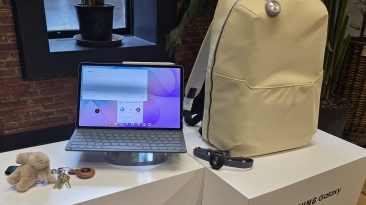
AI PCs are part of this picture as well. Intel used CES 2026 to position Core Ultra Series 3 as its first AI PC platform built on 18A, while laptop makers are already marketing higher NPU throughput as a mainstream feature. The result is simple: buyers will expect more local intelligence from ordinary devices, whether that means better summarization, smarter search, or faster creation tools without constant cloud dependency.
That same pressure reaches mobile software. When people decide to download melbet app, the real product test is no longer the badge on the icon but how well the app handles weak networks, short sessions, fast navigation, and live updates without wasting battery or attention. Over the next five years, software that respects time will keep beating software that only advertises features. The technical bar is rising quietly, but everywhere.
What will take longer than the hype suggests
A few things will move slower than headlines imply:
- Fully autonomous consumer robots in ordinary homes
- AI features that require constant heavy cloud spending
- Trust systems without open standards behind them
- Security promises that arrive as marketing before architecture
The next five years will still be messy. But the direction is not hard to read. Smarter local computing, more capable automation, clearer verification, and safer defaults are no longer fringe bets. They are becoming the operating system of the next cycle.