[Written By External Partner]
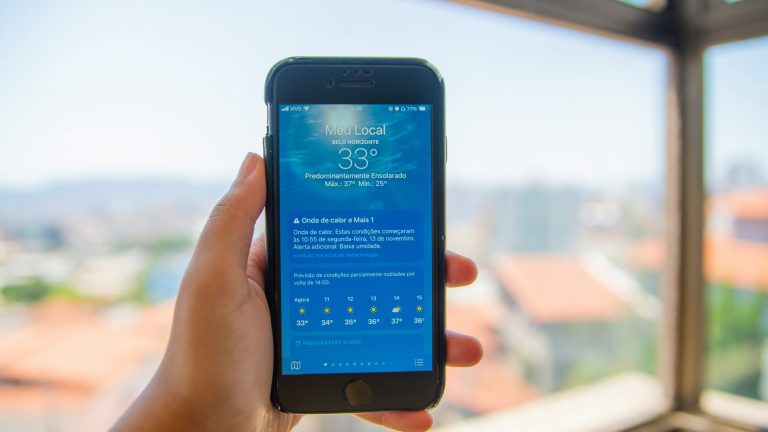
Smartphones have quietly become environmental interpreters, and with just an upgrade that began as a simple forecast widget, they have evolved into a complex decision support embedded in our daily lives.
Weather data no longer sits passively on a screen; it now actively shapes when people travel, how they dress, which routes they choose, and even how devices manage power and alerts.
This article will focus on the key elements that are driving advances in weather data collection, interpretation, and integration in smartphones and how it makes decision-making easier.
The Evolution of Smartphones from Generic Forecasts to Weather Intelligence
In the past, early mobile weather apps relied on broad regional forecasts that needed to be updated a few times per day, but now, modern smartphones consume far more data.
Advanced weather feeds now include hyperlocal forecasts, short-term nowcasts, radar-derived precipitation estimates, wind models, air quality indices, and temperature gradients that vary from location to location.
This data is tied directly to the phone’s location services, allowing recommendations to reflect where an individual is rather than where the nearest weather station happens to be.
Before, a generic forecast only offered limited value, but now, a smartphone can know when rain will begin in twelve minutes at the user’s current location when enabled. This way, the phone becomes a predictive assistant rather than an information board.
Below are further insights on how smartphones use advanced weather data to make daily activities easier for users:
- Timing Decisions Through Short-Term Weather Predictions
Daily decisions are often constrained by time; however, short-term weather prediction, often called nowcasting, has grown to become one of the most impactful advances in mobile weather intelligence.
Smartphones use high-frequency radar data and motion modeling to estimate weather changes within the next few minutes to an hour, which directly influences routine behavior on what and what not to do.
For pedestrians, knowing that heavy rain will start after arrival rather than during the journey affects transport choices. Hence, parents can now time school pickups around weather windows to reduce exposure risks.
Likewise, for delivery workers, nowcasts guide route selection and workload pacing, but these decisions might not be as fast as people want, thereby causing long-range forecasts to be insufficient. However, smartphones bridge that gap by translating advanced weather data into actionable timing guidance.
- Creating Better Travel and Mobility Choices
With the continuous spike in AI technologies, navigation and mobility apps embedded in smartphones increasingly depend on weather data.
A vivid example is how walking directions adjust estimated arrival times during heavy rain or extreme heat, how cycling apps reroute away from exposed paths during strong winds, and the way smart devices use weather conditions to anticipate demand spikes and adjust availability.
This integration improves decision-making by reducing uncertainty. Therefore, users no longer need to rely on intuition about how the weather might affect travel. Instead, they can receive recommendations shaped by real conditions, like slippery roads, reduced visibility, or heat stress.
- Health and Personal Comfort Considerations
Advanced weather data also influences health-related decisions, especially with the way smartphones incorporate temperature, humidity, UV index, pollen counts, and air quality data into wellness notifications.
These inputs help users decide when to exercise, whether to carry medication, or when to limit exposure entirely. For individuals with respiratory conditions, air quality alerts also prompt behavioral changes that reduce health risks.
In some cases, heat index warnings influence hydration reminders and activity levels, while cold exposure forecasts encourage the right clothing choices.
Overall, these decisions may appear minor individually, but collectively they reduce long-term health strain by aligning daily behavior with environmental realities.
- Energy Management and Device Performance Adjustments
Weather data affects not only user behavior but also how smartphones manage themselves. For instance, temperature influences battery performance, display brightness, and power consumption.
Therefore, this allows smartphones to adjust internal power strategies based on environmental conditions inferred from weather feeds and onboard sensors.
Even better, in cold conditions, devices can limit background processes to preserve battery life, while during extreme heat, charging rates can be reduced to prevent thermal damage.
Although these adjustments occur silently, they influence how long a device remains usable throughout the day, thereby becoming reliable in conditions that would otherwise degrade performance.
- Risk Awareness and Emergency Preparedness
One of the most consequential roles of advanced weather data on smartphones is risk communication, because now severe weather alerts can be tailored to precise locations rather than entire regions.
Before the new upgrades, flood warnings, storm surge notifications, and extreme wind alerts could reach only those in affected zones, reducing alert fatigue while increasing compliance.
However, this has been worked on to make alerts more timely and credible. Now, when a phone signals an approaching hazard based on verified data, users are more likely to act. This serves as an early warning system that compresses the time between awareness and action.
Endnote
The value of these upgrades does not lie in the data itself but in its translation into timely, relevant recommendations. Therefore, as weather models continue to improve and devices grow more capable, smartphones will increasingly serve as personal environmental advisors, quietly shaping daily choices with precision.