[Written By External Partner]
There was once a time when paying for a coffee using a watch sounded like something from a Sci-Fi film. But it’s completely normal right now to the point that people rarely think about it anymore.
Technology has quietly changed how consumers interact with money every day. If you look around any busy street or even a packed commuter train, you won’t fail to notice a fascinating gesture of people lifting their wrists to a digital terminal.
That silent but smooth technological shift is doing a lot more than just saving a few seconds at the till because it actively rewires how we interact with everyday expenditure. This article helps us to understand how wearable tech is reshaping consumer behaviour, and what this means for the future.
What Wearable Tech and Small Digital Payments Mean for Consumers
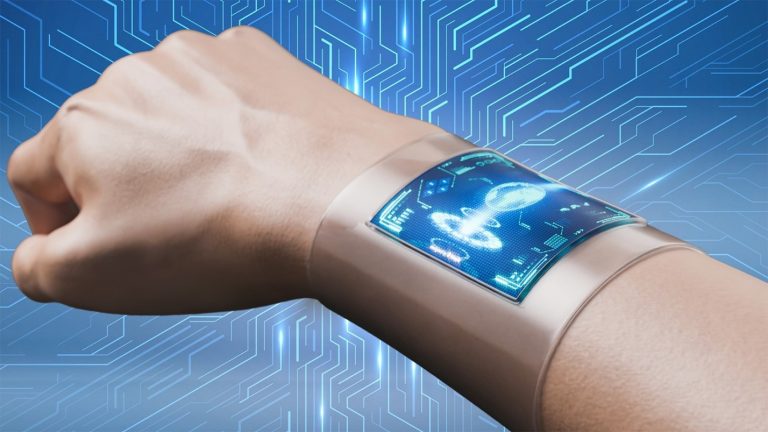
Wearable devices combine computing tech with items that people can wear on their bodies to enable them to perform tasks (e.g., health monitoring and contactless payments).
So, they are designed to be worn. Not carried.
Smartwatches are the most obvious example, but there are others like smart rings and fitness brands that are becoming increasingly common. Many of them support payment functionality, which means that instead of pulling out a bank card or a phone to access an app, you can simply tap the wearable device against a payment terminal to complete an instant transaction.
The process is a massive leap forward because it removes a lot of the steps involved in traditional methods, making it ideal even for small digital payments.
| Wearable Device | Common Payment Use |
| Smartwatches (e.g., Apple Watch) | Daily contactless purchases, often for smaller items or low cost bills. |
| Smart Rings | Quick small-value payments as paying via ring is not yet seamless. |
| Fitness Bands (e.g., Fitbit) | Occasional tap-to-pay transactions, often while the user is working out. |
| Smart Glasses | Emerging payment applications – but not as popular yet. |
How Wearable Devices Are Changing Everyday Payment Habits
When was the last time you had to dig into your wallet for a card or loose copper coins to make a payment?
Consumers who use wearable payments usually discover that everyday purchases become quicker and more seamless. Be it you’re grabbing a coffee, paying for transport, or buying lunch. That simplicity makes a difference.
Wearables do away with multiple steps that come with traditional payment tools. And although the difference may only save a few seconds or minutes, the simplicity remains stuck in consumers’ minds. It’s just like finding a good bargain or starting at a 15 euro deposit casino. The little positive moments are memorable.
Matthew Gover, Online Casino Expert at Mr. Gamble explained that “These days, consumers want payments to be as quick as possible, and we’ve noticed this in our own research. Users prefer payment methods that complete the same day, and if they do not, they are likely to try out competitors instead.”
Key Factors Driving Growth in Small Digital Payments
Small digital payments have exploded over the last couple of years, which didn’t happen by accident. It’s because several massive cultural and technical forces have aligned perfectly and pushed people away from physical money.
Consumers have realised that it’s better to explore digital payment options than to handle coins. Another factor driving growth in small digital payments is subscription culture, where people increasingly pay for online services monthly instead of making a one-time purchase.
More and more apps and games are using microtransactions, which means it’s only fair that people use digital payments with minimal effort.
Pros and Cons of Wearable Payments and Microtransactions
The advantages of wearable tech are easy to spot. Speed sits at the top of the list because the tech eliminates unnecessary steps and enables consumers to complete purchases quickly. They are also convenient, especially to those people who prefer moving about as light as possible without carrying their wallets or cash. There’s improved security, too.
Wearable payments and microtransactions have downsides, however.
It’s beyond any doubt that convenience can encourage impulsive spending. Device dependency also presents another challenge, in that if a wearable device runs out of charge or experiences a technical issue, you may be forced to make a payment with another method/device.
How Convenience and Speed Influence Consumer Behaviour
Human beings are naturally wired to take the path that has the least resistance (more convenience). So, the moment you make a payment process easier, the more people will use it more often.
It’s not that they intend to spend more, but the reduction in friction simply makes the process less strenuous. An example of this is with 10 euro registration bonus casino offers. The smaller amount means there is less friction and users tend to gravitate towards these.
Alina Anisimova, Banking Expert at Mr. Gamble stated that “We always urge consumers to be financially mindful. This means they should regularly check their budget and avoid spending outside of their disposable income, especially when using convenient payment methods or taking advantage of low cost deals.”
The Impact of Wearable Technology on Spending Patterns and Decision-Making
Smart software designers and engineers have engineered away the psychological pain of spending money, making our daily spending a lot more impulsive.
| Payment Generation | Required Action | Decision-Making Level |
| Cash and Coins | Physical counting of notes and coins | High psychological awareness |
| Credit and Debit Cards | Finding the card, inserting it, and entering the PIN | Moderate cognitive load |
| Smart Wearables | Moving the wrist closer to a reader | Almost zero awareness |
What the Future of Wearables and Small Digital Payments Could Look Like
We are only scratching the surface of what wearable tech can do. The next generation will make things feel even more integrated and faster, with things like smart rings that require no battery power at all being on the rise. There is also biometric clothing that configures tech right into the fabric of your jacket’s sleeve.