[Written By External Partner]
There’s something of a contradiction going on in the smartphone market right now. Phone makers like Apple and Google, both of whom have launched their new lines in time for the busy fall & Christmas sales period. And both, alongside Samsung, have gone really big on AI. In fact, at the recent launch events for Pixel 9 and iPhone 16, AI was the clear selling point. Yet, it’s worth noting that studies have shown that the average consumer puts AI way down their list of priorities when choosing a new device. At least for now, it’s an afterthought.
Of course, regardless of how many AI capabilities – or Apple Intelligence, if we are talking about iPhone – are added to a new device, consumers expect that each new device will be more powerful and offer better performance than the previous range. This has become particularly significant when it comes to smartphone gaming, arguably the fastest-growing entertainment genre in the world. But how far should you go in your purchase? Do you need to shell out the additional cash for a “Pro” or “Max” version of an already expensive device?
Top mobile RPG games deserve quality devices
The first thing to say is that premium smartphone games deserve to be played on a quality device. Looking at some of the best mobile RPG games in recent years, for instance, and you’ll clearly want to experience the games on a high-end smartphone. Yet, you are also arguably flirting with the law of diminishing returns. Yes, Genshin Impact is going to play much better on the new Pixel 9 compared to a clunky old Pixel 5a, but the difference in gameplay experience between an iPhone 15 and iPhone 15 Pro is only ever going to be marginal.
It is an interesting juncture for the mobile gaming sector, not least because you also have specialist gaming phones, including brands like Black Shark and Nubia, trying to carve out a niche. Sales of specialist gaming phones have risen steadily (but slowly) across the 2020s, but they are faced with the challenge of premium smartphone makers – Apple, Samsung, Google – trying to get a piece of the gaming market.
A typical example can be seen when comparing the iPhone 15 Pro and a specialist gaming device, the ASUS ROG Phone 7 Ultimate. The former has an adaptive refresh rate of 120 Hz, and the latter has an impressive 165 Hz. An adaptive refresh rate, meaning it fluctuates depending on need, of 1-120 Hz has become something of the norm among high-end smartphones. Anything over 90 Hz is pretty good for seamless gaming. By and large, over 120 Hz is really only necessary for pro gamers.
As with all gadgets, potential buyers need to ask themselves questions about what needs their device must serve. If your smartphone gaming experience is limited to a few rounds of Candy Crush, you should not be thinking about specialist gaming phones. If you are a serious gamer, then you should start weighing up the pros and cons of each device and what exactly you need.
Cost differentials might be surprising
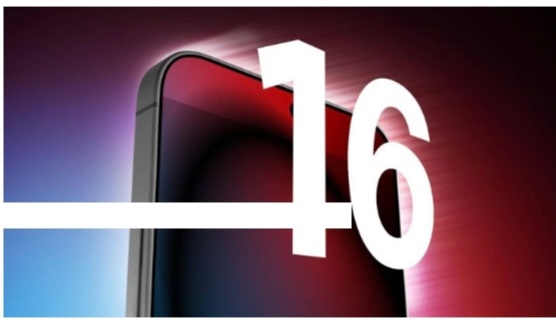
It’s worth noting that most specialist gaming phones, particularly the souped-up versions like the ROG Phone 7 Ultimate, are just as expensive – sometimes more expensive – than traditional premium smartphones. For example, the iPhone 16 Pro starts at $999 (Apple set prices the same as iPhone 15), whereas the ROG Phone 7 Ultimate starts at $1399. Now, it’s not as if the ROG Phone 7 Ultimate can’t do other stuff that normal phones do, and it can double up as your lifestyle/work phone, but the focus is on gaming, and, as such, there are sacrifices in other areas.
In the end, we are faced with a scenario where smartphone gaming is improving, with titles becoming more complex and demanding on a device. Broadly speaking, the smartphone device market has moved in tandem with it. However, only a small handful of us are pro gamers on smartphones, and most modern devices can handle what mobile game developers throw at them. Top-tier devices are more of a luxury than a necessity when it comes to gaming, but the marketing is geared toward making us think that we need more. There is no right answer when it comes to the best device for mobile gaming; it depends on the type of gamer you are.